





Geotextiles
Contents |
[edit] Introduction
Geotextiles were originally developed in the 1950s for use in erosion control situations where soil retention and fabric strength was required, such as in sea walls. They are now used in a wide range of civil engineering applications, such as roads, embankments, retaining structures, airfields, railways, dams and reservoirs, canals, coastal defences, and so on. In addition, composite materials known as geosynthetics have been developed for products such as geogrids, geotubes and meshes, for a range of geoengineering applications.
Geotextiles are typically made using synthetic fibres such as polyester or polypropylene which create a flexible and porous fabric capable of providing strength and stability. There are three basic forms:
- Woven: This resembles sacking.
- Needle-punched: This resembles felt.
- Heat-bonded: This resembles ironed felt.
[edit] Uses of geotextiles
Geotextiles have the ability to reinforce, protect, filter, drain and separate, and many applications use them alongside soil, placed at the tension surface for strength purposes.
The main uses of geotextiles include:
[edit] Separation
Geotextiles can be used to prevent the mixing of two soil layers of different particle sizes, such as landfill material and native soil, or stone material and subgrade soil.
[edit] Stabilisation
The geotextile acts as a separator, allowing water from soft natural soil to pass into a free-draining construction soil, which allows the natural soil to consolidate, thereby gaining strength and providing a more suitable surface for foundations.
[edit] Drainage
Geotextiles can be used to enable transmissivity, where the flow of water runs parallel to the plane of the geotextile. Superfluous water can be collected and discharged efficiently, particularly by needle-punched non-woven materials. The characteristic of transmissivity can be optimised using geotextiles of varying thicknesses.
[edit] Filtration
Geotextiles, of a needle-punched structure, can be used to provide an interface for the filtration of fine particles in soils. The structure of the geotextile enables fine particles to be retained while allowing water to pass through. As water passes through, soil is filtered out and builds up behind the geotextile, creating a natural soil filter.
[edit] Reinforcement
Due to their high tensile strength and soil-fabric friction coefficient, heavy geotextiles can be used as a reinforcement solution, using fill materials to reinforce earth structures. the geotextile is placed within the material, in the same way as with reinforced concrete. While stabilisation is achieved by allowing water to drain from unstable soil, reinforcement is provided for by the stress/strain characteristics of the geotextile which add strength to the whole system. This is as opposed to stabilisation, which places the geotextile on or around the required area.
[edit] Protection
Geotextiles are used to protect earth embankments from erosion. Leaching of fine material can be prevented by placing geotextiles in layers. Sloped, stepped shapes are also effective in protecting shorelines from storm damage. They can be made impermeable when impregnated with an asphaltic emulsion, making them suitable for use as moisture barriers, for example, in the repair of pavements.
In combination with steel wire fencing, geotextiles can be used to contain explosive debris during building demolitions.
NB Guide to energy retrofit of traditional buildings, published by Historic Environment Scotland in November 2021, defines geotextiles as: ‘…moisture vapour permeable artificial fabrics.’
[edit] Related articles on Designing Buildings
Featured articles
Check out some of the best features and news from Designing Buildings as well as key stories from around the web.
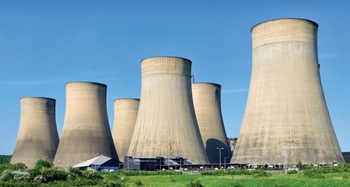
The heritage of nuclear and conventional power stations.
New measures to stop people being ripped off

Government to protect families from cowboy builders and aggressive bailiffs.

New Futurebuild showcase brings an innovation-first approach.
National Planning Policy Framework

Understanding the 2026 changes.
ECA's public affairs priorities

Member consultation opens to shape priorities for 2027 to 2030.

Dutyholder responsibilities from 1 July 2026.
Where performance meets practice

The Building Envelope Stage at UKCW Birmingham.

CIAT publishes briefing on planning reforms.
Leaders in Learning for Practice Network

Call for conservation leaders in learning to register interest in new network.
The importance of early engagement

Construction lessons from the Trillium HealthWorks Experience Centre.
Mayors are to be given planning call in powers

Mayors across England will be able to make the most important planning decisions.

The Master Builder: William Butterfield and his times. Book review.